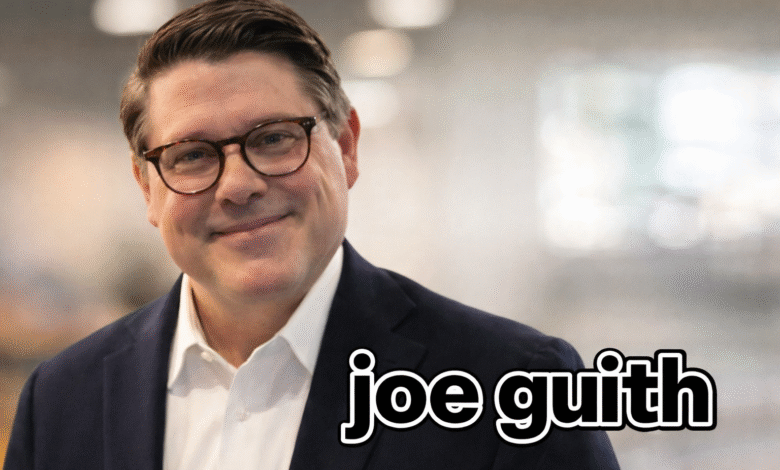
Joe Guith: Visionary Leader Transforming the Global Restaurant Industry

Introduction
Joe Guith has emerged as one of the most influential leaders in the global quick-service restaurant (QSR) sector. Known for his strategic acumen and operational expertise, Guith has transformed some of the world’s leading food brands, including Church’s Texas Chicken, CKE Restaurants, and Focus Brands. His approach balances franchise growth with customer experience, driving both profitability and brand loyalty. While his career is a testament to effective leadership, it also demonstrates the challenges of steering global restaurant portfolios in a highly competitive industry.
Guith’s story is not just about climbing the corporate ladder; it is about redefining operational excellence and strategic brand management. His leadership philosophy focuses on empowering franchisees, enhancing customer engagement, and modernizing traditional restaurant models. By examining Joe Guith’s career journey, this article highlights his key contributions, leadership approach, and the impact he has made on the global QSR industry.
Quick Bio
| Attribute | Details |
|---|---|
| Full Name | Joe Guith |
| Nationality | American |
| Current Role | CEO, CKE Restaurants Holdings, Inc. |
| Past Roles | CEO, Church’s Texas Chicken; Brand President, McAlister’s Deli & Cinnabon |
| Education | BBA & MBA, University of Michigan |
| Industry | Quick-Service Restaurants (QSR), Consumer Brands |
| Expertise | Franchise Management, Brand Growth, Operational Excellence |
Early Career and Foundations in Leadership
Building Expertise in Consumer Brands
Joe Guith began his professional journey in management and strategy roles with prominent global brands such as The Coca-Cola Company and Yum! Brands (KFC). These formative years allowed him to gain hands-on experience in large-scale operations, managing extensive territories, and working with franchise networks. By navigating complex business challenges early in his career, Guith developed the operational insight and strategic thinking that would define his later leadership roles.
Working in multinational environments provided Guith with exposure to diverse business models and cultural dynamics. While these experiences built his confidence in managing large teams, they also taught him the difficulties of balancing operational efficiency with brand consistency across multiple markets. These lessons became critical when he later assumed executive roles in franchised restaurant businesses.
Leadership at Focus Brands
Driving Multi-Brand Growth
At Focus Brands, Joe Guith served in senior roles including Brand President and Restaurant Category President. He oversaw multiple restaurant brands such as McAlister’s Deli, Moe’s Southwest Grill, Schlotzsky’s, and Cinnabon. Guith’s leadership focused on operational improvements, franchisee support, and revenue growth. By implementing innovative strategies, he strengthened brand positioning and expanded the reach of each portfolio.
Guith’s tenure at Focus Brands highlighted both the positive outcomes and challenges of managing multiple brands simultaneously. On one hand, his initiatives increased profitability and enhanced customer experience; on the other hand, managing diverse brand identities required careful balancing of resources and strategic priorities. His ability to navigate these complexities demonstrates his capability as a versatile and results-driven executive.
CEO of Church’s Texas Chicken
Transforming a Global Quick-Service Brand
In 2022, Joe Guith became CEO of Church’s Texas Chicken, a fast-growing global brand with over 1,500 locations in more than 20 countries. Under his leadership, the company underwent strategic repositioning, operational enhancements, and digital transformation initiatives to improve customer engagement. Guith’s focus on franchise collaboration strengthened the company’s growth trajectory, making it more competitive in the global QSR market.
However, leading a global franchise brand comes with challenges. Guith navigated complexities such as aligning international operations, managing varying franchisee expectations, and responding to market competition. Despite these obstacles, his tenure demonstrated his ability to drive growth while maintaining operational discipline and brand consistency.
CEO of CKE Restaurants
Steering Iconic U.S. Brands
In March 2025, Joe Guith was appointed CEO of CKE Restaurants Holdings, Inc., the parent company of Carl’s Jr. and Hardee’s. His role involves leading strategic growth, enhancing customer experience, and strengthening franchise relationships. Guith’s appointment signifies a new chapter for CKE Restaurants, with an emphasis on brand revitalization, digital innovation, and market expansion.
While CKE is a major player in the U.S. fast-food industry, challenges such as shifting consumer preferences, supply chain constraints, and competitive pressures require Guith to balance innovation with operational efficiency. His experience at Church’s Texas Chicken and Focus Brands equips him to meet these challenges effectively.
Leadership Philosophy and Style
Empowering Franchisees and Teams
Joe Guith emphasizes empowering franchisees and operational teams, believing that collaborative leadership drives sustainable growth. By focusing on franchisee support, employee engagement, and customer satisfaction, he ensures that operational strategies align with brand values and long-term goals.
Balancing Innovation with Tradition
Guith also demonstrates the ability to modernize legacy brands without compromising their core identity. While he implements digital initiatives and marketing strategies to attract new customers, he maintains operational traditions that loyal consumers expect. This dual approach has become a hallmark of his leadership style in the fast-food industry.
Impact on the QSR Industry
Joe Guith’s career has influenced both brand growth and industry practices. By leading multiple major QSR brands, he has introduced operational strategies that improve efficiency, customer experience, and franchisee collaboration. His approach underscores the importance of data-driven decision-making and strategic innovation in sustaining brand competitiveness.
His achievements also highlight the challenges of global operations. Managing diverse markets, aligning international franchise networks, and responding to competitive threats are constant tests of leadership. Guith’s ability to navigate these complexities demonstrates the value of experienced leadership in the QSR sector.
Conclusion
Joe Guith’s journey illustrates how strategic vision, operational expertise, and collaborative leadership can drive growth in the fast-paced restaurant industry. From his early roles at Coca-Cola and KFC to executive positions at Focus Brands, Church’s Texas Chicken, and CKE Restaurants, Guith has consistently demonstrated his ability to improve brand performance and franchisee success.
While challenges remain in managing global QSR operations, Guith’s experience and leadership style position him to continue shaping the future of the industry. His work underscores the importance of balancing innovation with tradition and operational discipline with customer engagement.
FAQ
Q1: Who is Joe Guith?
A1: Joe Guith is an American business executive and CEO of CKE Restaurants Holdings, Inc., with extensive experience in the quick-service restaurant industry.
Q2: What brands has Joe Guith led?
A2: He has led Church’s Texas Chicken, CKE Restaurants (Carl’s Jr. and Hardee’s), and held senior leadership roles at Focus Brands, including McAlister’s Deli, Moe’s Southwest Grill, and Cinnabon.
Q3: What is Joe Guith’s leadership style?
A3: Guith focuses on empowering franchisees, improving customer experience, balancing innovation with tradition, and strengthening operational efficiency.
Q4: Where did Joe Guith study?
A4: He holds both a Bachelor of Business Administration (BBA) and a Master of Business Administration (MBA) from the University of Michigan, Stephen M. Ross School of Business.
Q5: What is Joe Guith’s impact on the QSR industry?
A5: Guith has driven growth, operational improvements, franchise collaboration, and digital transformation across multiple global restaurant brands, influencing industry practices and competitive strategies.