Howard Thurman: The Trailblazer of Nonviolence and Spiritual Leadership

Introduction
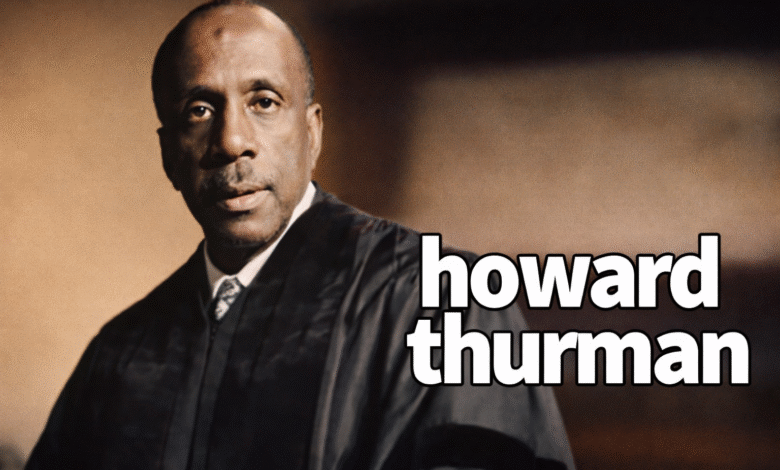
Howard Thurman was an iconic figure in the history of American theology and civil rights. A spiritual guide to many of the major leaders in the American Civil Rights Movement, including Dr. Martin Luther King Jr., Thurman blended deep theological insight with a compelling vision for nonviolent resistance to oppression. His work touched not only the hearts of those fighting for justice but also the souls of those seeking spiritual liberation. Thurman’s life was a testament to how a committed faith could intersect with social activism, creating lasting change in the lives of oppressed people.
Thurman’s unique approach to theology combined mysticism, social justice, and a deep understanding of the power of love and compassion. His reflections on the teachings of Jesus, particularly in relation to the oppressed, have shaped a theological framework that continues to resonate today. In this article, we’ll explore the life of Howard Thurman, his intellectual journey, and the profound impact he had on religious thought and civil rights.
Quick Bio:
| Full Name | Howard Washington Thurman |
|---|---|
| Date of Birth | November 18, 1899 |
| Place of Birth | Daytona Beach, Florida, USA |
| Date of Death | April 10, 1981 |
| Education | Morehouse College, Rochester Theological Seminary |
| Career Highlights | Dean at Marsh Chapel, Boston University; Author of Jesus and the Disinherited |
| Legacy | Mentor to Civil Rights Leaders, Influence on Nonviolence |
Early Life and Education
Howard Washington Thurman was born on November 18, 1899, in Daytona Beach, Florida, during a time of intense racial segregation. Raised in a community that felt the sting of racial injustice, Thurman was profoundly influenced by his family, especially his grandmother, who was once enslaved. From an early age, he was exposed to Christian teachings and found a deep sense of purpose through faith.
He attended Florida Baptist Academy in Jacksonville and later enrolled in Morehouse College, where he excelled academically. He graduated as the valedictorian in 1923, a clear testament to his dedication to both his faith and his education. After Morehouse, he went on to Rochester Theological Seminary, where he earned his Bachelor of Divinity in 1926, later becoming an ordained minister.
Career Beginnings and Ministry
Thurman’s early career was marked by both pastoral work and academic teaching. In the late 1920s, he took on the role of pastor at Mount Zion Baptist Church in Oberlin, Ohio, and simultaneously served as a professor of religion at Morehouse College and Spelman College in Atlanta. His academic roles allowed him to influence a new generation of Black scholars and religious leaders. He was deeply invested in the spiritual lives of his students and believed that theology must be rooted in the lived experiences of marginalized communities.
The Impact of Gandhi and Nonviolence
A pivotal moment in Thurman’s life came when he traveled to India in the mid‑1930s and met with Mahatma Gandhi. This encounter reinforced his commitment to the principles of nonviolence and led him to formulate a distinctive theology of love, nonviolent resistance, and spiritual liberation. Thurman was deeply inspired by Gandhi’s philosophy of satyagraha, which emphasized the power of truth and love in overcoming oppression.
Thurman’s work, particularly in his influential book Jesus and the Disinherited, drew on this philosophy. He interpreted Jesus’ teachings not from the perspective of religious elites but through the eyes of the oppressed, offering a radical critique of society’s treatment of the poor and marginalized.
The Fellowship Church and the Struggle for Interracial Unity
In 1944, Thurman co‑founded the Church for the Fellowship of All Peoples in San Francisco, which became the first interracial, interfaith congregation in the United States. The church was based on the belief that spiritual unity should transcend racial, ethnic, and religious boundaries. This was a groundbreaking endeavor, considering the segregated nature of American churches at the time.
Thurman’s vision for this church was clear: it was a place where people could come together in worship and fellowship, regardless of their race or background. He wanted it to be a living example of the unity and love that he preached, creating a space for reconciliation in a divided society.
Dean at Boston University and Continued Spiritual Leadership
In 1953, Thurman became the Dean of Marsh Chapel at Boston University, becoming the first African American to hold such a position at a predominantly white university. This appointment was a significant milestone in his career and a symbol of the breaking of racial barriers in higher education. Thurman was not only a spiritual leader but also a profound intellectual who continued to challenge the status quo with his messages of justice, equality, and peace.
During his time at Boston University, he mentored countless students and became a revered figure in religious circles. His deep spiritual wisdom and commitment to social justice inspired many who went on to become leaders in their own right.
Legacy and Influence
Howard Thurman’s influence extends far beyond his own lifetime. His ideas about spirituality, nonviolence, and social justice continue to resonate with both religious and secular thinkers. He left a profound legacy, particularly in the civil rights movement, where his ideas shaped the thinking of leaders like Dr. Martin Luther King Jr. King, who described Thurman as one of his greatest influences, applied Thurman’s principles of nonviolent resistance in his own work, which became the foundation for the American Civil Rights Movement.
Thurman’s works have had a lasting impact on theology, spiritual practice, and social activism. His commitment to the belief that true spirituality must address the conditions of the oppressed continues to inspire modern-day activists and religious leaders alike.
Conclusion
Howard Thurman was more than just a theologian and a religious leader. He was a visionary who saw the potential for love, peace, and unity in a world fraught with division and hatred. His ideas about nonviolence, racial reconciliation, and the spiritual life continue to inspire countless individuals and movements across the globe. As we reflect on his life, it’s clear that Thurman’s legacy will continue to influence generations to come, urging us all to seek justice, peace, and spiritual unity.
FAQ
1. Who influenced Howard Thurman’s ideas?
Thurman was deeply influenced by Mahatma Gandhi, whose philosophy of nonviolence shaped much of Thurman’s thinking about resistance and spirituality.
2. What is Howard Thurman’s most famous book?
His most well‑known work is Jesus and the Disinherited, in which he explores the teachings of Jesus from the perspective of the oppressed.
3. What is Howard Thurman’s contribution to the Civil Rights Movement?
Thurman mentored Dr. Martin Luther King Jr. and other leaders of the Civil Rights Movement, providing them with a theological framework for nonviolent resistance.
4. What was Thurman’s role in interfaith dialogue?
Thurman co‑founded the Church for the Fellowship of All Peoples, the first interracial, interfaith congregation in the U.S., embodying his vision for unity beyond religious and racial divisions.
5. Where is Howard Thurman’s legacy preserved?
Thurman’s papers and legacy are preserved at the Howard Thurman Center for Common Ground at Boston University, continuing to inspire spiritual and social change.