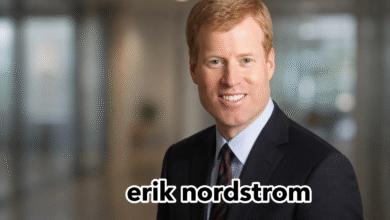
Alan Pace: A Powerful Profile of the Strategic Mind Behind Modern Football Ownership


Introduction
Alan Pace is a name that has become increasingly influential in modern football ownership and global sports investment. Known for his strategic mindset and financial discipline, Alan Pace represents a new generation of club owners who combine corporate expertise with long-term sporting ambition. His rise in the football world has not been without debate, but it has undeniably reshaped conversations around sustainability, governance, and data-driven decision-making in professional football.
Unlike traditional owners driven purely by legacy or fandom, Alan Pace entered football through structured investment logic. This has brought both optimism and criticism. On one hand, his approach emphasizes stability, planning, and infrastructure; on the other, it exposes clubs to the realities of modern finance. Understanding Alan Pace requires examining both the positives and the pressures that define his career.
Quick Bio: Alan Pace
| Detail | Information |
|---|---|
| Full Name | Alan Pace |
| Known For | Sports investor, football club chairman |
| Nationality | American |
| Date of Birth | 11 August 1968 |
| Age | 57 (as of 2026) |
| Profession | Businessman, investment executive |
| Main Firm | ALK Capital |
| Industry Focus | Sports, media, entertainment |
| Notable Roles | Chairman of Burnley Football Club |
Early Life and Educational Foundation
Alan Pace was born in the United States on 11 August 1968. While detailed information about his childhood and family background is not publicly disclosed, his professional journey reflects a strong academic and analytical foundation. His early years shaped a mindset focused on global markets rather than local boundaries, which later influenced his international business outlook.
Rather than entering sports directly, Pace built his credentials in finance. This background is critical to understanding his leadership style. He approaches football clubs not only as cultural institutions but also as complex organizations that require financial resilience, governance structures, and long-term planning to survive in an increasingly competitive environment.
Start of Career in Finance
Alan Pace began his professional career in the financial sector, where he spent decades developing expertise in investment management and strategic finance. His work in high-level financial environments exposed him to risk assessment, asset restructuring, and long-term value creation. These skills later became central to his role in sports ownership.
This phase of his career was largely behind the scenes, but it laid the groundwork for everything that followed. The discipline of finance taught Pace that success is rarely instant. Instead, it comes from systems, patience, and informed decision-making. This philosophy would later define his reputation in football ownership, for better or worse.
ALK Capital: The Core Business Venture
The most important business venture associated with Alan Pace is ALK Capital. The firm focuses on strategic investments, particularly in sports, media, and entertainment. ALK Capital is not a short-term speculation vehicle; it is structured around long-term value growth and operational improvement.
Through ALK Capital, Pace applies corporate strategy to sectors traditionally driven by emotion. This approach has allowed him to enter football with a clear framework: control costs, invest wisely, modernize operations, and build sustainable success. Supporters may disagree on execution, but the intent is clear and consistent.
Alan Pace and Football Club Ownership
Alan Pace became widely known after leading the acquisition of Burnley Football Club. As chairman, he took on the responsibility of guiding a historic English club through the realities of modern football economics. His tenure has included both promotion and relegation, highlighting the volatile nature of the sport.
Positively, his leadership introduced financial structure, data-led recruitment strategies, and long-term planning. Negatively, critics argue that financial models can clash with fan expectations and traditional football culture. This tension defines much of the conversation around Alan Pace’s ownership style.
Expansion into European Football
Beyond England, Alan Pace expanded his sports investment footprint by acquiring a majority stake in a major Spanish football club through his investment structure. This move positioned him within the growing multi-club ownership model seen across Europe.
The expansion reflects ambition and confidence but also introduces complexity. Managing clubs across different leagues, cultures, and regulatory systems is challenging. While this strategy offers potential synergies, it also increases scrutiny. Pace’s ability to balance these factors will significantly shape his long-term reputation.
Leadership Style: Strengths and Criticism
Alan Pace is often described as analytical, strategic, and measured. His leadership favors planning over impulse and systems over shortcuts. These qualities are valuable in a financially unstable football landscape, offering clubs a chance at long-term survival.
However, this same approach attracts criticism. Fans sometimes perceive it as distant or overly corporate. Football is emotional, and data-driven decisions do not always align with supporter sentiment. Alan Pace operates in this difficult space, where rational strategy must coexist with passionate fan culture.
Net Worth and Sources of Income
Alan Pace’s wealth is primarily derived from his career in finance and his investment activities through ALK Capital. His estimated net worth is around £190 million. This figure reflects long-term professional success rather than short-term football profits.
Importantly, specific salary figures are not publicly disclosed. His income is linked to investment performance and equity holdings rather than traditional executive wages. This structure aligns with his identity as an investor rather than a day-to-day football executive.
Career Overview and Ongoing Influence
Over the years, Alan Pace has transitioned from finance to sports investment without abandoning his core principles. His career demonstrates how modern football ownership is evolving, influenced by global capital, analytics, and sustainability models.
Whether admired or criticized, his influence is undeniable. Clubs under his leadership are part of broader discussions about financial responsibility, governance, and the future shape of professional football. Alan Pace is not merely participating in the sport; he is helping redefine how it is run.
Conclusion
Alan Pace represents both opportunity and controversy in modern football. His strategic mindset, financial expertise, and long-term vision offer clubs a pathway toward stability and growth. At the same time, his corporate approach challenges traditional ideas of football ownership and identity.
The truth lies in balance. Alan Pace’s legacy will not be defined solely by trophies or league positions, but by whether his model proves sustainable, respectful to club culture, and adaptable to the unpredictable nature of football. His story is still being written, and its final chapter remains open.
Frequently Asked Questions (FAQ)
Who is Alan Pace?
Alan Pace is an American businessman and sports investor known for his leadership in football club ownership through his firm ALK Capital.
What is Alan Pace known for in football?
He is best known as the chairman of Burnley Football Club and for expanding into European football ownership.
What is Alan Pace’s source of income?
His income comes from investment activities, particularly through ALK Capital, rather than a fixed public salary.
Is Alan Pace a traditional football owner?
No, he represents a modern, data-driven ownership model focused on financial sustainability and long-term planning.
Why is Alan Pace a debated figure?
He receives both praise for financial discipline and criticism for applying corporate strategies to emotionally driven football environments.