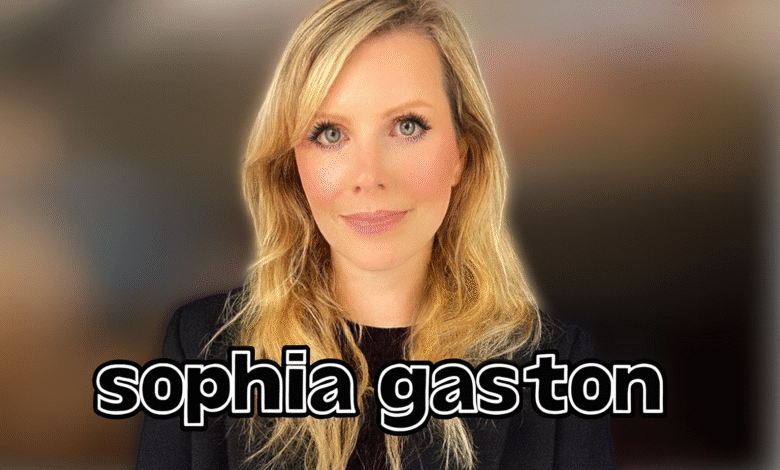
sophia gaston: Powerful Journey of a Strategic Thinker and Modern Geopolitical Voice

Introduction
Sophia Gaston is a distinguished British foreign-policy researcher whose voice has become increasingly influential in modern debates about national security, geopolitical competition, and the evolving role of democratic nations. Her work stands out because she bridges two worlds: the world of strategic statecraft and the world of societal trends, public opinion, and cultural change. This unique combination allows her to analyse global security through a lens that acknowledges not just military or diplomatic realities but also the social and political foundations that influence national direction.
In a world facing both promise and disruption, Sophia Gaston represents the type of leadership that democracies urgently need: analytical, balanced, forward-thinking, and deeply engaged with how societies evolve. The following article explores her profile, professional milestones, research interests, and the positive and negative challenges she navigates as a public thinker.
Quick Bio (Verified Information Only)
| Topic | Details |
|---|---|
| Full Name | Sophia Gaston |
| Nationality | British |
| Profession | Foreign-policy researcher, geopolitical analyst |
| Known For | Research on UK foreign policy, Euro-Atlantic and Indo-Pacific security, public opinion, democratic resilience |
| Education | Studied at the London School of Economics (LSE) |
| Major Roles | Senior Research Fellow at King’s College London; Senior Advisor at The Asia Group; Senior Fellow at ASPI |
| Focus Areas | Strategic competition, UK security posture, public opinion and political culture, alliances (NATO, AUKUS) |
| Expertise Style | Evidence-based analysis, strategic forecasting, societal-political research |
sophia gaston’s Professional Journey
Sophia Gaston’s career showcases a steady rise from social-policy research into the upper tier of global strategic analysis. She began her career in research roles that explored how societies change over time, particularly focusing on political identity, trust, media influence, and democratic engagement. Her early work allowed her to develop strong skills in qualitative and quantitative research, shaping her ability to read social trends long before they become political realities.
From there, she moved into think-tank leadership roles, including directing the British Foreign Policy Group. In this position, she developed major national-level research projects on public opinion, global engagement, and the United Kingdom’s international identity. Her work helped bring evidence-based understanding into the foreign-policy space, which had often lacked robust data on what citizens think or how they interpret major international decisions.
Influence in National Security and Statecraft
As global security challenges intensified, Sophia Gaston transitioned into deeper strategic and geopolitical research. Her contributions in national security, defence strategy, and alliance-based cooperation reflect her understanding that modern threats require both societal and strategic responses.
She is recognised for her expertise in Euro-Atlantic security, NATO policy, and the Indo-Pacific region, with a strong emphasis on the geopolitical rise of authoritarian states such as China and Russia. Her work supports policymakers by offering strategic forecasting, industrial-security insights, and frameworks for understanding long-term risk.
Her senior role at King’s College London, within the Centre for Statecraft and National Security, reflects this shift into core strategic analysis. She also works as a Senior Advisor to The Asia Group, contributing to defence-industry strategy and international cooperation.
Research Focus and Intellectual Strengths
Understanding Power in a Changing World
Sophia Gaston’s research combines geopolitics, social psychology, political identity, and cultural change. She argues that a nation’s foreign policy cannot be separated from its internal dynamics. A country must understand its own societal strengths, national identity, and public attitudes if it wants to project stable and credible power internationally.
Key Themes She Explores
-
The UK’s global role amid shifting power dynamics
-
Strategic competition with authoritarian states
-
Defence-industrial resilience and supply-chain security
-
Public trust, democratic health, and political identity
-
Alliance-building, especially NATO and AUKUS
-
Euro-Atlantic and Indo-Pacific security connectivity
Why Her Approach Matters
Her perspective is considered refreshing because she views national strength as a combination of societal confidence and strategic capability. This allows her to identify both positive opportunities and negative vulnerabilities within democratic systems.
Positive and Negative Dimensions of Her Influence
Positive Points
-
Provides balanced, evidence-driven analysis
-
Builds bridges between policy, society, and strategic risk
-
Recognized internationally for clarity and intellectual precision
-
Strengthens discussions on democratic resilience
-
Contributes to responsible foreign-policy debates
Challenges & Pressures (Negative Dimensions)
-
Operating in a highly politicized environment
-
Navigating public scrutiny while maintaining neutrality
-
Addressing misinformation and polarisation
-
Managing complex global narratives involving major powers
These pressures are common for analysts working at the intersection of national security and public discourse.
Major Contributions to Policy and Strategy
Sophia Gaston founded and leads the AUKUS Industry Forum, a strategic platform that connects policy leaders, industry specialists, and security experts. She also advises government bodies and delivers strategic-risk training for senior civil servants. Her work often plays a role in shaping discussions about defence strategy, industrial security, and alliance cooperation.
She is a frequent media commentator, invited to discuss foreign policy, global affairs, democratic change, and security challenges. Her insights appear in high-level debates and policy conversations across the UK, Europe, the United States, and the Indo-Pacific.
Conclusion
Sophia Gaston’s journey represents a model of modern strategic leadership. Her combination of geopolitical insight, social-research expertise, and commitment to democratic values has positioned her as an important voice in understanding the challenges facing the United Kingdom and the wider democratic world. By integrating intelligence, public opinion data, and strategic forecasting, she helps shape more informed and resilient policy thinking. Her influence continues to grow as global dynamics shift and democratic nations search for stronger, smarter ways to respond.
Frequently Asked Questions (FAQ)
Who is Sophia Gaston?
She is a British foreign-policy researcher known for her work on national security, global strategy, and public-opinion trends.
What is her research focus?
Her work focuses on Euro-Atlantic security, Indo-Pacific strategy, public opinion, democratic resilience, and the geopolitical challenges posed by rising authoritarian states.
Where has she worked?
Her major roles include positions at King’s College London, The Asia Group, the Australian Strategic Policy Institute, the British Foreign Policy Group, Demos, and Policy Exchange.
Is her personal information public?
No. Details such as date of birth, family, income, or private life are not publicly available.
Why is she influential?
Because she merges strategic analysis with societal insights, shaping nuanced conversations about democracy, security, and global power.
vmagazine