chase lochmiller: A Powerful Visionary Redefining Energy, AI, and the Future of Computing

Introduction
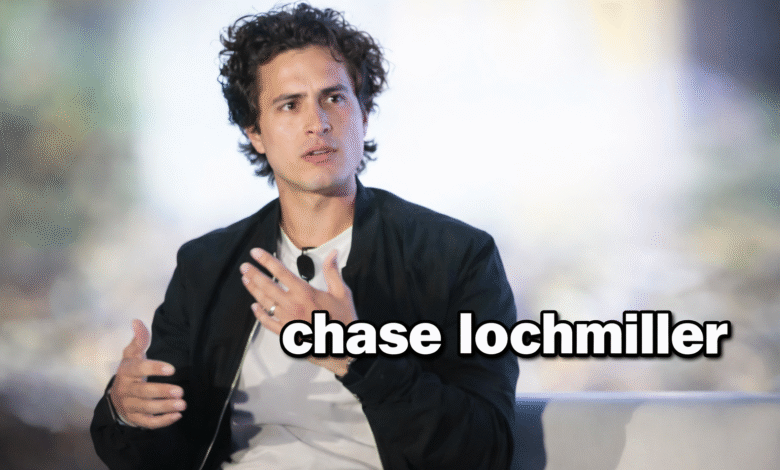
Chase Lochmiller is widely recognised as a technology entrepreneur who helped create a new category where energy infrastructure and high-performance computing converge. Known for his sharp technical background and decisive leadership, he co-founded Crusoe, a company built on the idea that wasted or stranded energy can be transformed into valuable computational power.
His journey is not without tension. On one hand, he represents bold innovation and environmental pragmatism; on the other, his work challenges traditional assumptions about how energy and data centres should be built. This balance between opportunity and risk defines his career and explains why he has become an influential voice in discussions about AI infrastructure and energy efficiency.
Quick Bio
| Attribute | Details |
|---|---|
| Full Name | Chase Lochmiller |
| Nationality | American |
| Education | BS Mathematics & Physics (MIT); MS Computer Science (Stanford) |
| Known For | Co-Founder & CEO of Crusoe |
| Industry | Energy infrastructure, AI computing |
| Role | Entrepreneur, Technology Executive |
Early Life and Educational Foundation
Chase Lochmiller grew up in the United States and developed an early interest in mathematics, physics, and problem-solving. This inclination toward analytical thinking later shaped his approach to business, where complex systems and long-term optimisation play a central role.
His academic path reflects this focus. At the Massachusetts Institute of Technology, he studied mathematics and physics, disciplines that demand precision and resilience. He later advanced his technical expertise with a master’s degree in computer science at Stanford University, where exposure to large-scale computing and artificial intelligence strengthened his understanding of how software and hardware interact at scale.
Starting a Career in Quantitative Finance
Lochmiller began his professional life in quantitative trading and finance, an environment known for high pressure and unforgiving competition. Working in data-driven trading firms, he built and optimised computational systems where milliseconds and efficiency directly translated into profit or loss.
This phase of his career was both empowering and limiting. While it sharpened his technical discipline and decision-making under uncertainty, it also revealed a desire to apply similar tools to problems with broader real-world impact. The experience gave him deep insight into infrastructure, compute efficiency, and risk management—skills that later became foundational in entrepreneurship.
Founding Crusoe: From Concept to Company
In 2018, Chase Lochmiller co-founded Crusoe, initially known as Crusoe Energy Systems. The core idea was simple but unconventional: energy that is routinely wasted—particularly from oil and gas operations—could be captured and used to power computing workloads instead of being flared or vented.
This concept positioned Crusoe at the intersection of energy economics and digital infrastructure. The company developed modular data centres capable of operating close to energy sources, turning excess energy into usable compute. Under Lochmiller’s leadership, Crusoe evolved from a niche solution into a broader platform for large-scale computing, including workloads linked to artificial intelligence.
Business Model and Strategic Vision
Crusoe’s strategy reflects Lochmiller’s belief in energy-first computing. Instead of placing data centres where land or connectivity is cheapest, the company prioritises proximity to available energy. This inversion of the traditional model allows faster deployment and improved utilisation of resources.
The approach carries advantages and criticisms. Supporters see it as a pragmatic way to address energy waste and rising AI demand. Critics argue that dependence on specific energy sources introduces operational complexity. Lochmiller has consistently framed this tension as a calculated trade-off—one that favours long-term scalability over short-term convenience.
Leadership Style and Company Culture
As a leader, Chase Lochmiller is often described as technically fluent and systems-oriented. He tends to focus on first principles, encouraging teams to question assumptions rather than follow industry norms. This has helped Crusoe move quickly in a space traditionally slowed by regulation and capital intensity.
At the same time, this style demands high standards. The pace and ambition of the company require teams comfortable with uncertainty and rapid iteration. While this culture attracts highly skilled engineers and operators, it also tests organisational resilience as the company scales.
Role in the AI Infrastructure Boom
The rapid growth of artificial intelligence has dramatically increased global demand for compute and power. Crusoe, under Lochmiller’s leadership, has positioned itself as an enabler of this growth by aligning AI infrastructure with available energy at scale.
This role has brought increased visibility and scrutiny. Large AI projects demand reliability, speed, and environmental accountability. Lochmiller’s ability to articulate a clear narrative around energy efficiency and compute deployment has made him a frequent participant in industry discussions about the future of AI infrastructure.
Challenges, Risks, and Criticism
Despite its momentum, the Crusoe model is not risk-free. Operating at the intersection of energy and technology exposes the company to regulatory shifts, commodity price volatility, and public debate around fossil-fuel-linked solutions.
Lochmiller has acknowledged these challenges indirectly through strategy rather than rhetoric. By diversifying energy inputs and expanding into broader data-centre development, Crusoe aims to reduce dependency on any single source. This adaptive approach reflects a leadership style that recognises constraints without allowing them to stall progress.
Influence and Industry Impact
Chase Lochmiller’s influence extends beyond his company. He represents a new generation of founders who blend deep technical training with infrastructure-scale ambition. His work has contributed to reshaping conversations about where and how computing should happen in an energy-constrained world.
By demonstrating that infrastructure innovation can emerge outside traditional technology hubs, he has expanded the mental map for entrepreneurs and investors alike. This influence is subtle but significant, particularly as AI continues to reshape global economic priorities.
Conclusion
Chase Lochmiller’s career illustrates the power—and tension—of bold, systems-level thinking. His work through Crusoe shows how unconventional ideas can challenge entrenched models and create new possibilities at scale. While his approach invites debate and carries risk, it also offers a compelling response to two defining challenges of our time: energy efficiency and computational demand.
Whether viewed as a disruptive innovator or a pragmatic realist, Lochmiller’s impact on energy-aligned computing is undeniable. His legacy is still forming, but it is already shaping how industries think about the future of infrastructure.
Frequently Asked Questions (FAQ)
Who is Chase Lochmiller?
Chase Lochmiller is an American technology entrepreneur best known as the co-founder and CEO of Crusoe, a company focused on energy-driven computing infrastructure.
What is Chase Lochmiller known for?
He is known for pioneering an energy-first approach to data centres, using otherwise wasted energy to power high-performance computing and AI workloads.
What is Crusoe?
Crusoe is an infrastructure company that builds and operates data centres designed to run on surplus or stranded energy sources.
What is Chase Lochmiller’s educational background?
He holds undergraduate degrees in mathematics and physics from MIT and a master’s degree in computer science from Stanford University.
Why is Chase Lochmiller influential in AI infrastructure?
His leadership aligns large-scale computing needs with innovative energy strategies, addressing both AI growth and energy efficiency challenges.